
How do I flush my water heater?
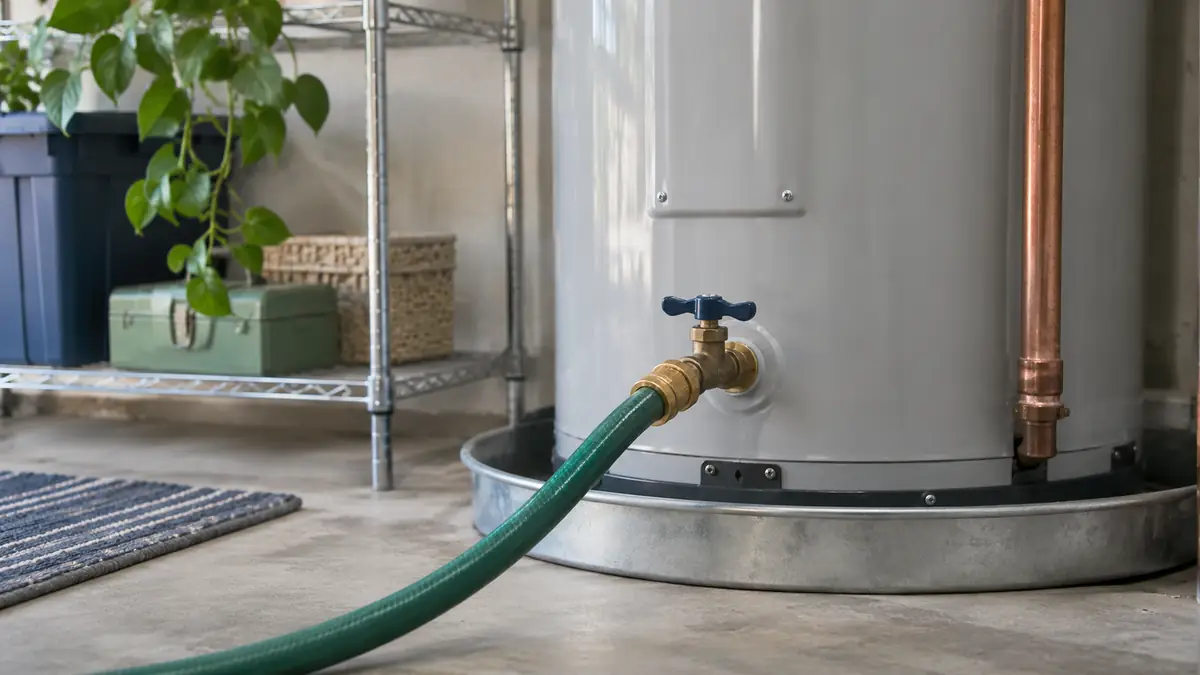
To flush a tank water heater, turn off the power or set the gas to pilot, close the cold water supply, and let the tank cool. Then drain it through a garden hose at the drain valve until the water runs clear. Refill the tank completely before the power or gas goes back on.
Quick steps
- Turn off the power at the breaker, or set a gas heater to pilot.
- Let the water cool for a few hours.
- Close the cold water supply valve to the tank.
- Attach a garden hose to the drain valve and run it outside or to a floor drain.
- Open a hot faucet in the house, then open the drain valve.
- Drain until the water runs clear. Open the cold supply for a few seconds to stir up the sediment.
- Close the drain valve, take off the hose, and open the cold supply so the tank fills.
- Wait until the hot faucet runs steady with no air. Only then turn the power or gas back on.
- Test the relief valve and look at the anode rod, following your heater's manual.
The longer version
Your water heater works hard and never complains. Then one day it starts to pop and rumble. That sound has a simple cause, and you can fix it with a garden hose and a free morning.
Dale in Garland kept hearing popping and rumbling from his water heater whenever it ran. He figured it was just an old tank talking. Rheem says sediment is the most common cause of that noise, and that flushing is the usual fix. So Dale flushed the tank.
Why it matters here
Minerals in the water settle at the bottom of a tank. Rheem explains that this sediment acts like a blanket, so the heater runs longer to heat the same water. That costs you money and wears on the heating parts.
Hot water is a big bill to begin with. The Department of Energy says water heating is about 18% of a home's energy use. A tank full of sediment makes that number worse.
Hard water leaves more minerals behind. Rheem says homes with hard water need to flush more often. I'll remind you when it's time for your house.
Each step, explained
Turn off the power or the gas
On an electric heater, flip the breaker in your electrical panel. The Department of Energy's Building America guide notes that most units use two breakers, often tied together with one switch. On a gas heater, follow your manual. You may need to close the gas valve or set the control to pilot.
Don't skip this step. The same guide warns that a heater that turns on while empty or partly empty can be damaged quickly.
Let the water cool
Wait a few hours. A. O. Smith says to let the heater cool before draining to cut the scald risk. The water that comes out of the drain is hot, so don't rush this part.
Close the cold water supply
Find the pipe that carries cold water into the top of the tank. It has a shutoff valve on it. Turn it closed. If your heater has no valve there, the guide says to shut off water to the whole house.
Hook up the hose
Near the bottom of the tank there's a small faucet, usually brass or white plastic, with a spot to screw on a garden hose. That's the drain valve. Screw the hose on and run the other end outside or to a floor drain. The hose has to end lower than the bottom of the tank, and the water is hot, so keep it away from your flower beds and from pets.
Lay a rag under the hose connection. It catches the drips, and you'll be glad it's there.
Open a hot faucet, then the drain
Turn on one hot water faucet in the house. Air coming in through the faucet is what lets the tank drain. Then open the drain valve by hand, or with a flat screwdriver if yours needs one.
Drain and stir the sediment
Let it run. After about 20 minutes, or once the flow stops, open the cold supply for about 10 seconds. That stirs up the sediment so it leaves with the water. Repeat if you need to, until the water runs clear.
If the stream slows to a trickle, the valve may be clogged with sediment. A. O. Smith says to call a plumber if the drain clogs and you can't empty the tank.
Refill before the power goes back on
Close the drain valve and take off the hose. Open the cold supply and let the tank fill. Open the hot taps so air can leave, then close each one when the air stops. When the hot faucet runs steady, the tank is full.
Now turn the power back on. A. O. Smith says never to run a heater with an empty or partly full tank, because dry elements can burn out. For gas, relight the pilot the way your manual says. Water may look cloudy for a bit, and the tank needs time to heat again.
Write the date on the water heater with a marker. I forget too, and that marker has saved me more than once.
The relief valve and the anode rod
Two small parts get a look while you're here. The relief valve is the safety valve with a small lever on it (the temperature and pressure relief valve).A. O. Smith says to lift the lever a few times to see that water comes out, then let it reset. Expect hot water, and wear gloves and eye protection.
The anode rod is a metal rod inside the tank that rusts away so the steel tank doesn't. How long it lasts depends on your water and how much hot water you use. Your manual shows how to check it, and a plumber can do it for you.
If you have a tankless heater
A tankless heater doesn't get flushed like a tank. Rheem says tankless units need descaling instead, which clears out mineral buildup. A. O. Smith says to follow the maker's manual for how and when, and to keep the inlet filter clear. Find your model's manual, and follow it.
What people get wrong
The biggest slip is turning the power back on too soon. An electric heater with an empty tank can burn out its elements. Wait until the hot faucet runs steady with no air, then flip the breaker.
Another is draining a hot tank. That water can scald you. Give it a few hours to cool, and keep the hose end pointed somewhere safe.
Some people skip the hot faucet. Without it, air can't get in, and the tank drains slowly or not at all. Open one before you open the drain.
Others stop at the first clear water. Open the cold supply for a few seconds, let it stir the bottom, and watch for cloudy water again. When it runs clear after the stir, you're done.
Last, some folks treat tankless like a tank. Check your manual and use the descaling steps there.
When to call a pro
Call a licensed plumber if the drain valve clogs and the tank won't empty, or if the relief valve gives no water when you test it. A. O. Smith says a faulty relief valve can let the tank build too much pressure. If it drips after a test, that can mean too much pressure or thermal expansion, and a pro should look at it.
Gas work and electrical panel work belong to a licensed pro. If you're not comfortable relighting a pilot, don't. Call someone. If the popping and rumbling keep going after a flush, Rheem says that's a sign to call a professional.
Sources
- Rheem, How often to flush your water heater and how to do it. Checked Nov 20, 2026.
- Rheem, The ultimate guide to water heater noises. Checked Nov 20, 2026.
- A. O. Smith, Water heater maintenance. Checked Nov 20, 2026.
- U.S. Department of Energy Building America Solution Center, Flushing a water heater tank. Checked Nov 20, 2026.
- U.S. Department of Energy, Water heating. Checked Nov 20, 2026.
I'll remind you when it's time.
Sign up, and I'll send you the job when your house needs it, with a short guide.
Reminders by text and email when your house needs them.
General information only, not a substitute for a licensed pro.